Introduction: Why True Horror Stories Captivate Us
(Tone: Analytical yet immersive, blending psychology with storytelling)
Horror is more than just a genre—it’s a psychological mirror. It reflects our deepest fears: the unknown, the uncontrollable, and the thin veil between sanity and madness. While fiction can terrify, there’s something uniquely chilling about real-life horror stories. They force us to confront an unsettling truth: the world is stranger, darker, and far more unpredictable than we’d like to believe.
This article isn’t just a collection of eerie tales. It’s an exploration of why these stories haunt us, how they challenge our perception of reality, and what they reveal about the human psyche. From alien encounters to demonic possessions, from unsolved mysteries to ritualistic horrors, these 13 stories blur the line between fact and nightmare.
The Psychology of Fear: Why We Can’t Look Away
(Tone: Theoretical, structured, with actionable insights for game designers and storytellers)
Before diving into the stories, let’s dissect why horror captivates us—and how these real-life nightmares exploit our psychological vulnerabilities.
1. The “Magic Circle” of Horror
(Concept: Johan Huizinga’s “Magic Circle” applied to horror) Horror stories create a safe space for fear. When we engage with them, we enter a “magic circle”—a mental boundary where the rules of reality are suspended. Inside this circle, we can experience terror without real danger, making horror both thrilling and cathartic.
For game designers and storytellers:
Use environmental storytelling (e.g., abandoned hotels, eerie dolls) to reinforce the magic circle.
Create rituals or rules within the narrative (e.g., “Don’t answer the phone after midnight”) to deepen immersion.
2. The Uncanny Valley and Cognitive Dissonance
(Concept: Freud’s “Uncanny” and Festinger’s Cognitive Dissonance Theory) The most terrifying stories exploit the uncanny—things that are almost human but not quite (e.g., a doll that speaks Spanish, a child walking backward up a wall). This triggers cognitive dissonance, a mental discomfort that forces us to question what we believe.
Example:
The Haunted Elsa Doll (Story #4) terrifies because it subverts expectations—a children’s toy behaving like a sentient entity.
The Exorcism in Indianapolis (Story #9) unsettles because it challenges our understanding of physics and human behavior.
For creators:
Introduce subtle distortions of reality (e.g., a reflection that moves on its own).
Use contradictory details (e.g., a “luxury hotel” where guests leap to their deaths) to create unease.
3. The Power of Suspense and the “What If?” Factor
(Concept: Alfred Hitchcock’s “Bomb Theory” and the psychology of anticipation) Suspense isn’t about the scare—it’s about the waiting. The most effective horror stories plant a question in the audience’s mind: “What would I do?”
Example:
The Enfield Monster (Story #1): “What if you opened your door and saw something not of this world?”
The Watcher (Story #12): “What if your dream home came with a stalker who knows everything about you?”
For engagement:
End sections with open-ended questions to prompt reader reflection.
Use second-person perspective (“Imagine you’re there…”) to heighten immersion.
13 Terrifying True Horror Stories
1. The Enfield Monster: When the Unexplained Knocks on Your Door
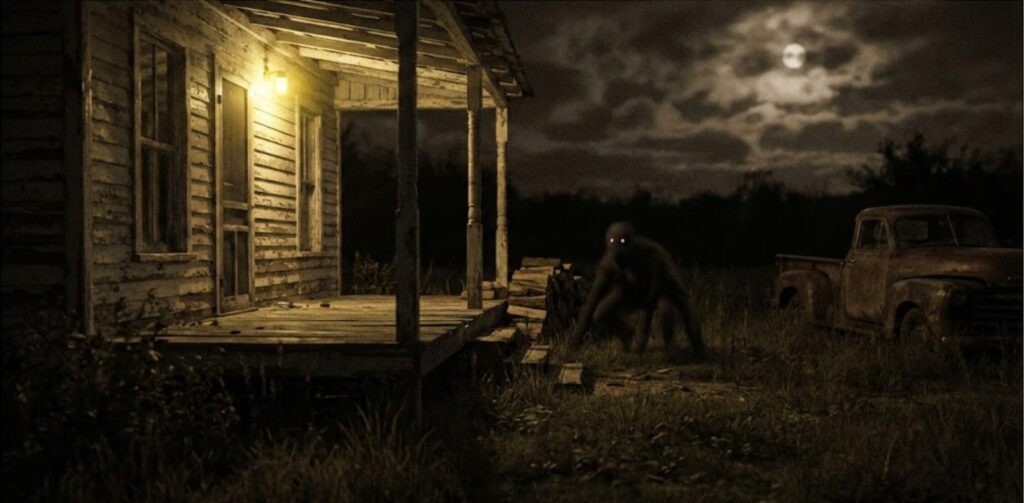
The Story: On a quiet night in 1973, Henry McDaniel of Enfield, Illinois, looked out his window and saw something impossible: a three-legged creature with a squat body, stubby arms, and eyes like flashlights. When police arrived, they found scratches on the screen door and footprints—not human, not animal, but with six toes.
McDaniel’s chilling warning: “If they find it, they’ll find more than one… and they won’t be from this planet.”
Why It Haunts Us:
Violation of natural laws: Three legs, six-toed footprints—this creature defies biology.
The “unknown observer” trope: The idea of being watched by something inhuman is a primal fear.
Lack of closure: No explanation was ever found.
Psychological Hook: This story exploits the “fear of the other”—a core human anxiety about encountering something beyond our understanding.
2. The Suicide Hotel: Where Beauty Lures Death
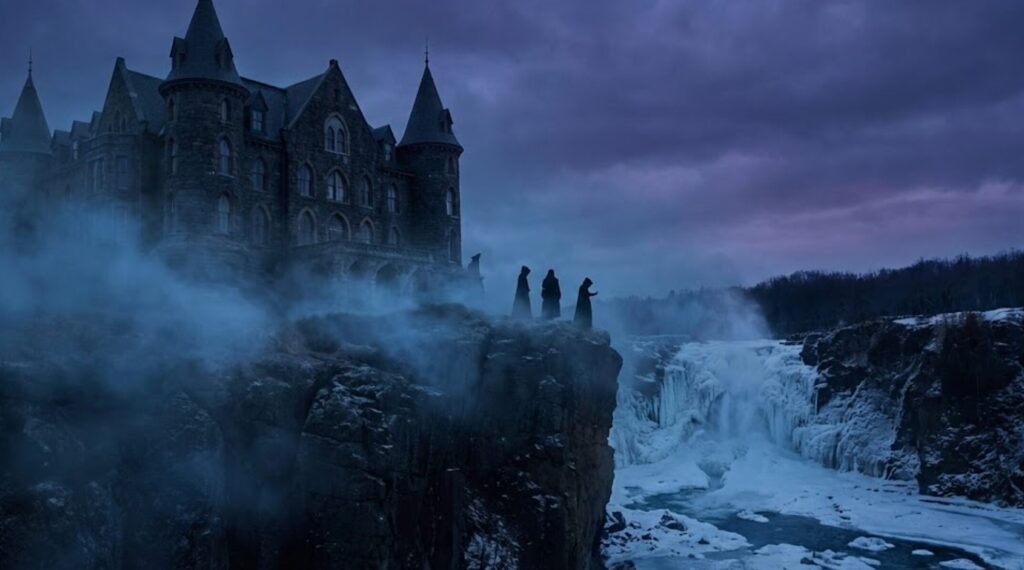
The Story: Colombia’s Hotel Del Salto, overlooking the breathtaking Tequendama Falls, is known as the “Hotel of the Leap.” Since its construction in 1923, guests have been drawn to its beauty—only to jump to their deaths. Local legend says the spirits of the Indigenous Muisca tribe, who leapt from the cliffs to escape Spanish colonizers, still whisper to the broken-hearted.
Why It Haunts Us:
Cognitive dissonance: A “luxury hotel” designed for death.
The “siren call” effect: The idea of a place so beautiful it compels self-destruction.
Historical trauma: The hotel’s dark past lingers in its present.
Psychological Hook: This story plays on the “allure of the abyss”—the human fascination with self-destruction and the unknown.
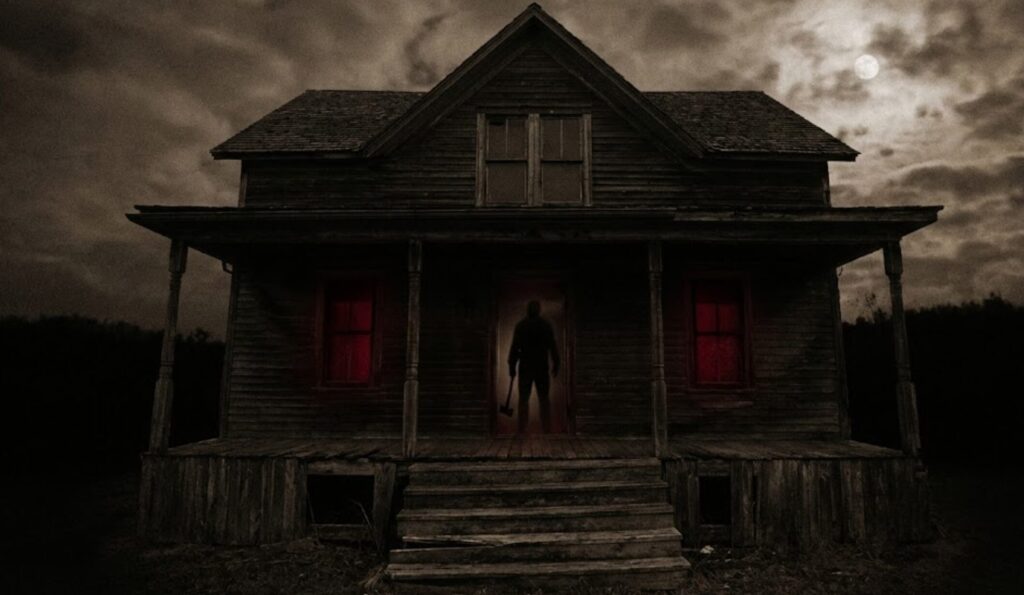
3. The Axe Murder House: Where Time Loops and Blood Stains Linger
The Story: In 1912, eight people—six children and two adults—were brutally axed to death in Villisca, Iowa. The killer was never found. Decades later, the house became a tourist attraction, where visitors report ghostly screams, shadowy figures, and the smell of blood.
In 2014, a visitor named Robert Laursen was stabbed in the chest at 12:45 AM—the exact time the original murders began. He survived but never spoke of what he saw.
Why It Haunts Us:
Temporal horror: The idea of a curse repeating itself across time.
The “haunted object” trope: The house itself seems to retain the memory of violence.
Unsolved mystery: The killer’s identity remains unknown.
Psychological Hook: This story exploits “chronostasis”—the brain’s perception of time slowing during traumatic events—and the fear of history repeating itself.
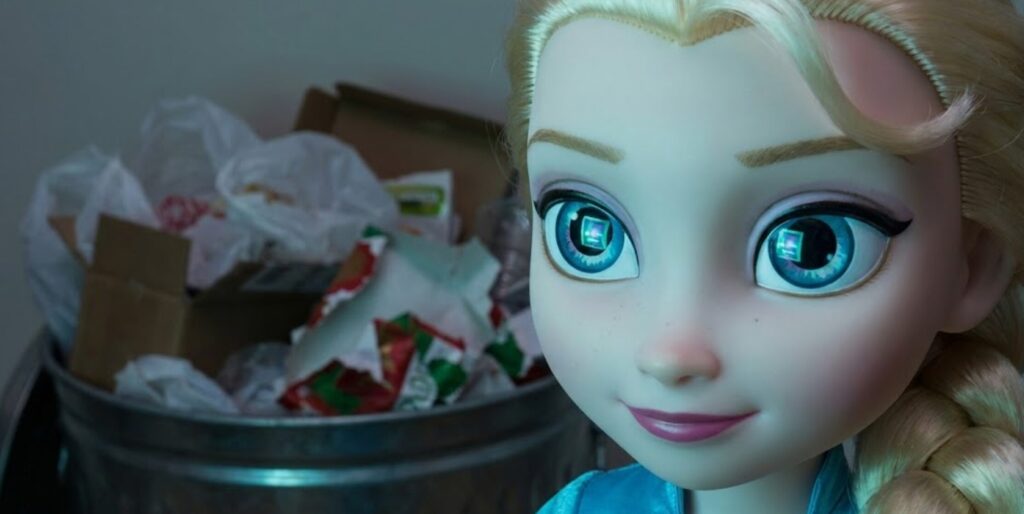
4. The Haunted Elsa Doll: When Childhood Toys Turn Sinister
The Story: A Houston family’s Frozen Elsa doll began speaking Spanish after two years of normal use. The mother, Emily Madonia, threw it away—twice. Both times, the doll returned. Once, it was waiting in the backyard after a family trip.
Why It Haunts Us:
Subversion of innocence: A children’s toy becoming a harbinger of terror.
The “uncanny valley”: The doll is almost human but not quite.
Persistence of evil: No matter how many times it’s discarded, it comes back.
Psychological Hook: This story triggers “automatonophobia” (fear of human-like figures) and the “uncanny valley” effect, where something familiar becomes deeply unsettling.
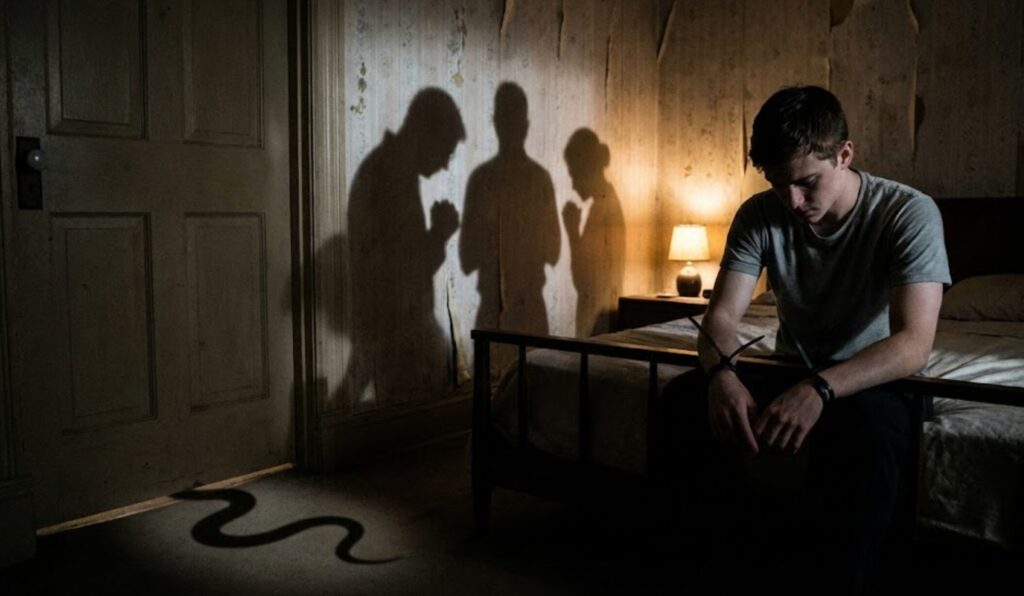
5. The Deadly Exorcism: When Faith Turns Fatal
The Story: In 2016, Kennedy Ife, a 26-year-old Londoner, became violent, claiming a python was eating him from the inside. His family restrained him for three days, praying over him. By the time they called 911, Kennedy was dead. The family was acquitted of all charges.
Why It Haunts Us:
Religious horror: The intersection of faith and madness.
Body horror: The idea of something inside you, consuming you.
Moral ambiguity: Was this a failed exorcism or murder?
Psychological Hook: This story exploits “somatic horror” (fear of bodily violation) and the “loss of autonomy”—the terror of not controlling your own mind or body.
6. Dead Animals in the Walls: The Dark Magic Beneath the Drywall
(Visual prompt: A sledgehammer smashing through a wall, revealing a rotting carcass wrapped in 1930s newspaper. The air shimmers with dust and the faint glow of candlelight.)
The Story: The Bretzuis family discovered their Pennsylvania home was insulated with dead animals, wrapped in 1930s newspapers. Experts linked it to Pennsylvania Dutch “Pow-Wow” magic—rituals for protection or curses. The family fell ill from the mold; the smell never went away.
Why It Haunts Us:
Violation of sanctuary: Your home, the one place that should be safe, is corrupted.
Hidden horrors: The idea of something sinister lurking unseen.
Cultural taboos: Dead animals used in dark rituals beneath your feet.
Psychological Hook: This story plays on “domestic horror”—the fear that your safe space is contaminated—and the “unknown history” of a place.
7. The Florida Teacher: When Trust Turns to Terror
(Visual prompt: A beach at dusk, a fire pit casting flickering shadows on a group of teenagers. A woman with wild eyes holds a broken bottle, her hands stained with blood.)
The Story: In 2012, Danielle Harkins, a Florida teacher, took seven students to a beach and told them to cut their skin to “release demons.” She burned their wounds with a lighter and heated metal. When the wind blew out the flame, she doused a boy’s hand in perfume and set it ablaze.
Why It Haunts Us:
Betrayal of authority: A trusted teacher becoming a tormentor.
Ritualistic violence: The methodical, almost ceremonial nature of the abuse.
Cult-like behavior: The blurred line between religion and madness.
Psychological Hook: This story triggers “betrayal trauma”—the terror of someone you trust turning against you—and the “corruption of innocence” (children being harmed by an adult).
8. The Death of Elisa Lam: A Mystery That Defies Logic
(Visual prompt: The infamous elevator security footage of Elisa Lam, her movements erratic and unnatural. The screen glitches, and for a split second, a shadowy figure stands behind her.)
The Story: In 2013, Elisa Lam vanished from Los Angeles’ Cecil Hotel. Security footage showed her acting strangely in an elevator—hiding, gesturing, as if talking to someone unseen. Weeks later, her body was found in a rooftop water tank. The hatch was locked from the inside.
Why It Haunts Us:
Unsolved mystery: No clear explanation for her death.
The “glitch in reality”: Her behavior in the elevator is inexplicable.
The hotel’s dark history: The Cecil is linked to serial killers and suicides.
Psychological Hook: This story exploits “the fear of the unseen”—what we don’t see is often scarier than what we do—and “urban legend creep” (the idea that certain places are cursed).
9. The Exorcism in Indianapolis: When Children Defy Physics
(Visual prompt: A child walking backward up a wall, their limbs bent at unnatural angles. A priest stands in the corner, holding a crucifix, his face pale with shock.)
The Story: In 2012, Latoya Ammons and her children became the focus of a documented demonic possession. Her 9-year-old son walked backward up a wall, flipped over his grandmother, and landed on his feet. A 12-year-old girl heard voices saying she’d “never see her family again.” 800 pages of official records corroborate the events.
Why It Haunts Us:
Defiance of physics: A child climbing walls like a spider.
Official documentation: This isn’t folklore—it’s recorded by police and psychologists.
The vulnerability of children: The idea of a child being used as a vessel.
Psychological Hook: This story triggers “existential horror”—the fear that the laws of nature can be broken—and “parental terror” (the inability to protect your child).
10. The Utah Murder-Suicide: Apocalypse Notes and Unanswered Questions
(Visual prompt: A handwritten to-do list: “Feed the pets. Water the plants. Kill the family.” The paper is stained with something dark—ink or blood.)
The Story: In 2014, a Utah family was found dead in their home. The parents left a to-do list that included “kill the family.” Investigators discovered the mother had been writing to Dan Lafferty, a convicted killer who believed in divine revelations. The family feared the apocalypse.
Why It Haunts Us:
The banality of evil: A shopping list for murder.
Cult-like delusions: The belief in a higher purpose justifying atrocity.
Unanswered questions: Why the children? Why now?
Psychological Hook: This story plays on “cognitive dissonance”—how ordinary people can commit unthinkable acts—and the “fear of the end times.”
11. The Phone Stalker: When Your Device Becomes the Enemy
(Visual prompt: A cell phone screen glowing in the dark, displaying a distorted voice message: “I know what you’re wearing.” The background shows a family huddled in fear.)
The Story: In 2007, the Kuykendall family received calls from a scratchy-voiced stalker who knew their private conversations, locations, and clothing. Police traced the calls—back to the family’s own phones, even when turned off.
Why It Haunts Us:
Technological horror: Your device betraying you.
Loss of privacy: The idea of being watched through your phone.
Helplessness: The police couldn’t stop it.
Psychological Hook: This story exploits “modern paranoia”—the fear that technology is beyond our control—and “invisible threats” (you can’t fight what you can’t see).
12. The Watcher: A Stalker Who Knows Too Much
(Visual prompt: A luxurious suburban home at night. A letter slides under the door, the envelope marked with a single red eye. The text reads: “I am pleased to know the names of the young blood you have brought me.”)
The Story: A New Jersey family bought their dream home—only to receive letters from “The Watcher,” who claimed to have watched the house for decades. The letters included chilling details about the family’s children and hints of “secrets in the walls.” The family fled and sued the previous owners.
Why It Haunts Us:
Violation of safety: Your home is no longer a sanctuary.
The unknown observer: Someone knows everything about you.
Unresolved threat: The Watcher was never caught.
Psychological Hook: This story triggers “home invasion anxiety” and the “fear of the unseen stalker”—a modern boogeyman.
13. Issei the Cannibal: When Madness Becomes Celebrity
(Visual prompt: A mugshot of Issei Sagawa, smiling eerily. In the background, a shadowy figure holds a fork and knife over a dinner plate. The text reads: “It tasted like Kobe beef.”)
The Story: In 1981, Issei Sagawa shot and ate a classmate in Paris. Due to a legal loophole, he was never tried in Japan. He became a celebrity, writing books about cannibalism and appearing on TV. His chilling quote: “It tasted like Kobe beef… but I’d rather eat that than human flesh.”
Why It Haunts Us:
The banality of evil: A polite, educated man committing unspeakable acts.
Legal failure: The system let him walk free.
Cultural fascination: Society’s morbid curiosity about monsters.
Psychological Hook: This story plays on “moral horror”—the terror of evil wearing a human face—and the “fear of the system failing us.”
Conclusion: Why These Stories Endure
(Tone: Reflective, analytical, with a call to action for creators and readers)
These 13 stories endure because they exploit universal fears:
The unknown (Enfield Monster, Elisa Lam)
Betrayal (Florida Teacher, Phone Stalker)
Loss of control (Exorcism, Haunted Doll)
The corruption of safe spaces (Axe Murder House, The Watcher)
For Storytellers and Game Designers:
Use environmental storytelling to create immersion (e.g., a doll that moves when players aren’t looking).
Exploit cognitive dissonance (e.g., a “safe” hotel that lures guests to their deaths).
Leave unanswered questions to fuel player/reader theories.
For Readers:
Which story haunted you the most? Comment below with the number.
Would you run, fight, or stay? Share your reaction.
Do you believe in the supernatural, or is there a rational explanation? Let’s debate.
Engage, Share, and Confront the Fear
“Fear is the oldest story we tell ourselves.” These 13 tales prove that reality is often stranger—and scarier—than fiction. But why do we seek out these stories? Because in the face of the unknown, we’re not just afraid—we’re alive.
Your turn:
Comment below: Which story terrified you the most? Would you run, fight, or stay?
Share this article with someone who “doesn’t believe in this stuff.” Let’s see if they sleep tonight.
Subscribe for more deep dives into the psychology of fear, game design, and the stories that shape us.
Sweet dreams… if you dare.
Visual Appendix: AI Art Prompts for Each Story
(For creators who want to generate thumbnails or illustrative content.)
Story
AI Art Prompt
Enfield Monster
“A hyper-realistic, 1970s-style photo of a three-legged creature with glowing pink eyes, lurking in a rural yard at night. The creature’s skin is gray and leathery, and its footprints (with six toes) are visible in the mud. Moody, cinematic lighting.”
Suicide Hotel
“A gothic, cliffside hotel at dusk, mist swirling around it. Silhouettes of figures stand too close to the edge, as if hypnotized. The waterfall below is frozen in time. Dark, moody, inspired by ‘The Shining’.”
Axe Murder House
“A dimly lit, early 1900s wooden house at night. The porch creaks, and a shadowy figure holding an axe stands in the doorway. The windows glow faintly red. Horror-movie poster style.”
Haunted Elsa Doll
“A close-up of a pristine Frozen Elsa doll, its glassy eyes reflecting an unnatural light. In the background, a trash can overflows with crumpled bags—the doll’s ‘grave.’ The doll’s mouth is slightly open, as if whispering.”
Deadly Exorcism
“A dimly lit bedroom, a young man restrained to a bed with cable ties. Shadows of family members praying around him. A snake’s silhouette slithers under the door. Dark, claustrophobic, inspired by ‘The Exorcist’.”
Dead Animals in Walls
“A sledgehammer smashing through drywall, revealing a rotting carcass wrapped in 1930s newspaper. The air shimmers with dust and the faint glow of candlelight. The bones are arranged in a ritualistic pattern.”
Florida Teacher
“A beach at dusk, a fire pit casting flickering shadows on a group of teenagers. A woman with wild eyes holds a broken bottle, her hands stained with blood. The ocean in the background is unnaturally still.”
Elisa Lam
“The infamous elevator security footage of Elisa Lam, her movements erratic and unnatural. The screen glitches, and for a split second, a shadowy figure stands behind her. Grainy, VHS-style filter.”
Exorcism in Indy
“A child walking backward up a wall, their limbs bent at unnatural angles. A priest stands in the corner, holding a crucifix, his face pale with shock. The room is bathed in flickering candlelight.”
Utah Murder-Suicide
“A handwritten to-do list: ‘Feed the pets. Water the plants. Kill the family.’ The paper is stained with something dark—ink or blood. The background is a suburban home, too quiet, too normal.”
Phone Stalker
“A cell phone screen glowing in the dark, displaying a distorted voice message: ‘I know what you’re wearing.’ The background shows a family huddled in fear, their faces illuminated by the phone’s eerie glow.”
The Watcher
“A luxurious suburban home at night. A letter slides under the door, the envelope marked with a single red eye. The text reads: ‘I am pleased to know the names of the young blood you have brought me.’”
Issei the Cannibal
“A mugshot of Issei Sagawa, smiling eerily. In the background, a shadowy figure holds a fork and knife over a dinner plate. The text reads: ‘It tasted like Kobe beef.’ Dark, satirical, inspired by true crime documentaries.”